
Owner: HWMC
Catalog#: 2OC-IDST-08
Struck Idiophones
'Djiki’ Iatmul Water Drum
Papua New Guines – Sepik River
Melanesia – Papua New Guinea
Iatmul People
Wood, pigment, shell
Early-Mid 1900s
Length: 39 in.
Idiophones – Directly Struck – Drum Idiophone
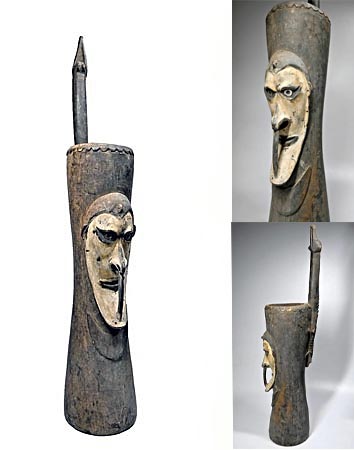
A carved wooden water drum known locally by the Iatmul people as ‘Djiki’. It is a hollow hourglass-shaped wooden drum without a membrane. To play the ‘djiki’, it is first plunged into a hole or into the river so that when beaten it makes a thunderous loud percussive sound. This is sometimes done behind a screen of woven branches and leaves. During ceremonial rituals, young initiates may have to fight their way through the screen to discover the secrets of the sound.
This drum ‘djiki’, made by the Iatmul people, features a highly stylized mask like face inset with shell eyes and a tall symbolic handle in zoomorphic / crocodile form. The Iatmul believe they are descended from a giant crocodile, and that the world is the back of that first crocodile. The Sepik River in Papua New Guinea is home to large populations of both freshwater and saltwater crocodiles. This river is famously known as the “River of Crocodiles” and they are a significant part of the local culture, symbolizing strength as seen here incorporated into tribal traditions and rituals.
The Iatmul people are a large ethnic group of about 10,000 people inhabiting autonomous villages along the middle Sepik River in Papua New Guinea. They are among the most prolific and accomplished sculptors in New Guinea. The Iatmul religion is complex and includes a diversity of rites and ceremonies devoted to ancestors, spirits, and other supernatural beings and animals.
Resource: https://www.metmuseum.org/art/collection/search/313846